




Cart is empty. Please go to your home page for listing it.


Azraq Wetland Reserve is located in the eastern desert of Jordan,
approximately 115 kilometers from the capital, Amman. The reserve was named
after the Azraq Oasis, which forms an important part of its area and is
distinguished by its ponds and wetlands that give the site its unique
character.
The reserve is considered one of the most important protected areas
within Jordan’s national network of nature reserves. It is recognized as the
first wetland reserve in the Arab world under the Ramsar Convention and the
thirteenth worldwide. Established in 1977, the reserve covers an area of
approximately 74 km² and is home to the Azraq Killifish (Aphaniops sirhani),
the only endemic vertebrate species in Jordan. It also serves as a major
stopover site for migratory birds traveling between Europe, Asia, and Africa.
In 2018, the reserve joined the IUCN Green List of Protected and Conserved
Areas.
Over the past decades, the Azraq Oasis has experienced severe
environmental degradation due to excessive groundwater extraction and illegal
well drilling. This led to a significant decline in water levels and the drying
of large parts of the wetland, negatively affecting the ecosystem and the
migratory birds that depend on the oasis as a major stopover during migration.
In response to this environmental decline, Royal Society for the
Conservation of Nature began a restoration program in 1994 to rehabilitate the
oasis and restore its wetlands and water bodies, with support from
international environmental organizations. Restoration efforts included
reintroducing water into parts of the oasis, creating permanent ponds and
wetlands, improving natural habitats for birds and wildlife, and monitoring
biodiversity through sustainable ecosystem management.
The society also plays an important role in protecting the Azraq
Killifish, the only endemic vertebrate species in Jordan, through habitat
conservation, regular population monitoring, and specialized breeding programs
aimed at preventing its extinction. These efforts have contributed to the
recovery of important wetland areas and the return of many migratory and
resident bird species to the reserve. In addition, boardwalks and birdwatching
facilities have been established to promote ecotourism and raise awareness
about the importance of wetland conservation in Jordan.
The reserve is characterized by rich biodiversity, containing
nearly two-thirds of Jordan’s recorded bird species, with around 329 migratory
and resident bird species. It also supports more than 216 plant species, a
total of 63 species in fauna, over 163 invertebrate species, 15 species of
dragonflies, and two amphibian species.
Many interesting archaeological sites lie within easy reach of Azraq Lodge, including the famous but misnamed ‘desert castles’: Qasr Amra, Qasr Kharana and Azraq Castle. Qasr Amra is one of the best-preserved Umayyad bathhouses in the world and a World Heritage Site. Its interior walls are covered in lively frescos dating back to 700 AD. There are also many dramatic desert landscapes to discover, including moon-like plains of black basalt and white valleys of chalk.

You can book several activities in Azraq Wetland Reserve online, make sure to check the calendar activities before booking to confirm the availability.


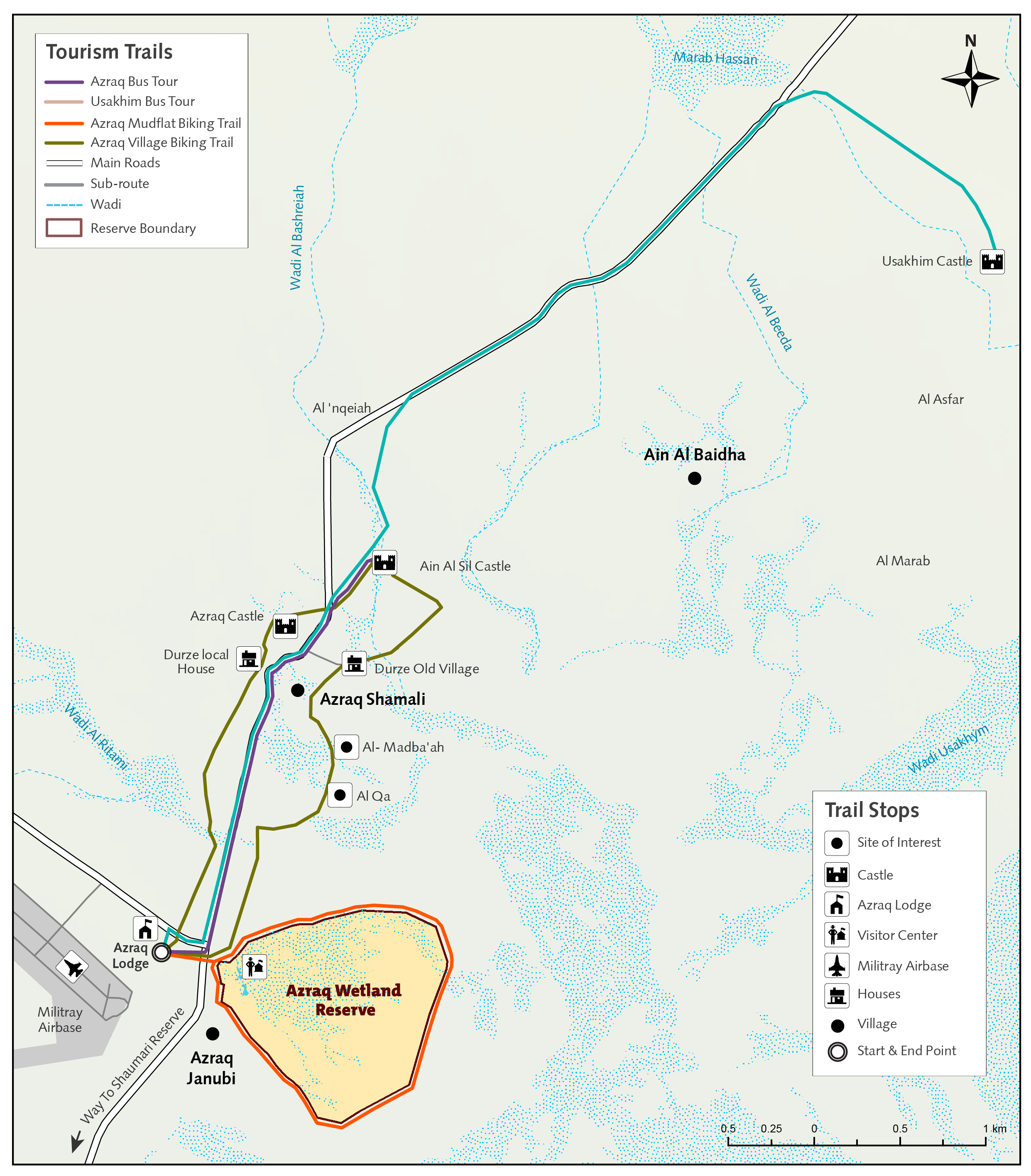 Azraq trails map