



Cart is empty. Please go to your home page for listing it.

BirdLife International today launched its new State of the World’s Birds report during the Global Flyways Summit, held in Nairobi, Kenya, in partnership with Nature Kenya. Published every four years, this edition is the first to focus entirely on migratory birds and the flyways on which they depend.
Coinciding with the launch of the report, the Global Flyways Summit will witness the signing of the “Nairobi Flyways Declaration” by key stakeholders, including governments, scientists, non-governmental organisations, conservation experts and financial institutions. The declaration represents a commitment to intensifying efforts and strengthening cooperation to protect migratory birds and their habitats across borders. This comes alongside more than $6 billion mobilised by development banks since 2021 to finance conservation efforts. Together, these achievements mark a major turning point and a significant step forward in the global coordinated response to conserving migration flyways.
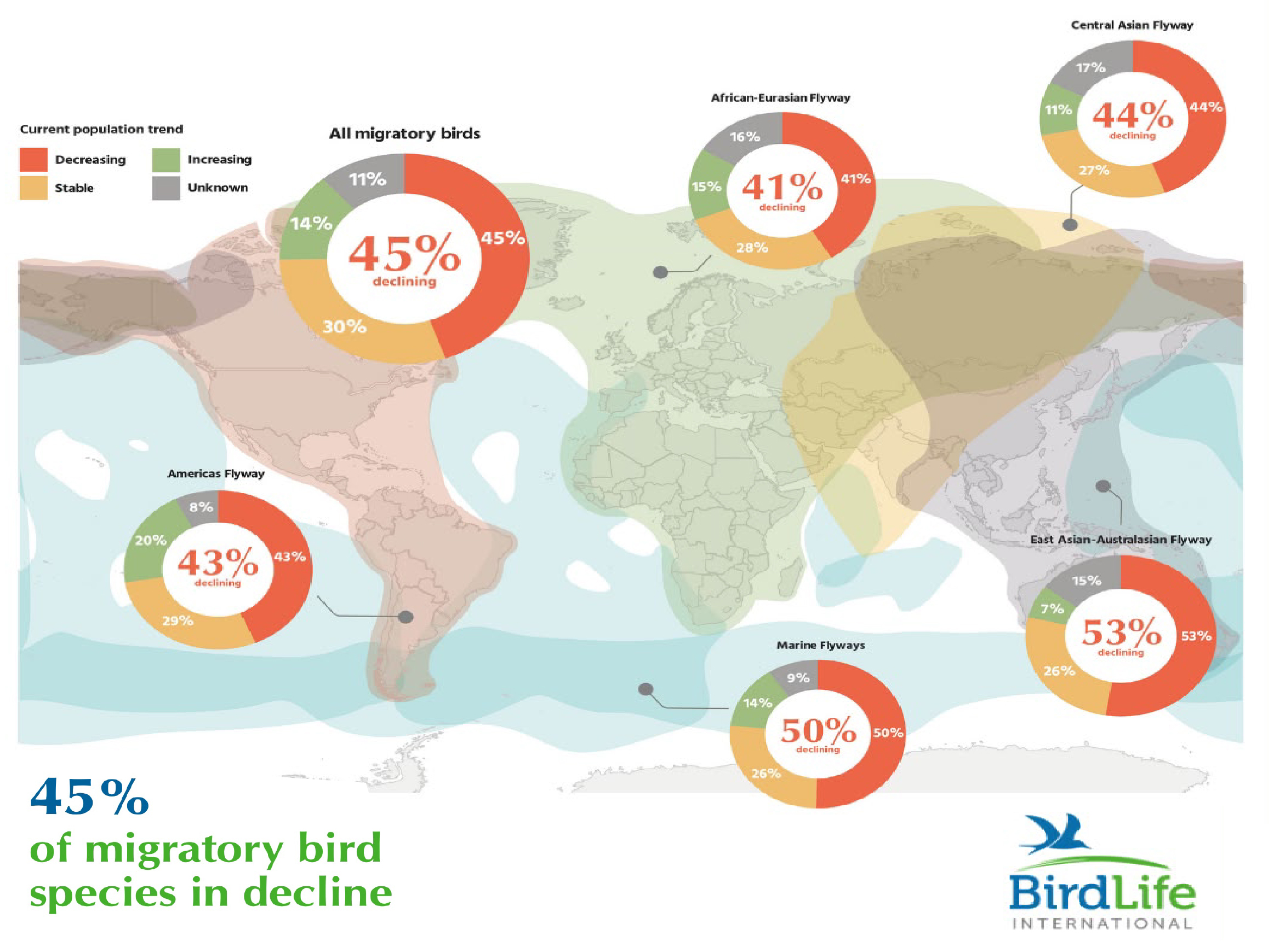
The findings of the State of the World’s Birds report reveal a concerning situation, with 45% of migratory bird species experiencing population declines, while one in nine species is at risk of extinction.
In 2025, the Slender-billed Curlew was officially declared extinct, with the last confirmed sighting recorded at a lake in Morocco in February 1995. This represents the first global extinction of a bird in mainland Eurasia and Africa in recent centuries. Six other migratory bird species have also been confirmed or are suspected to have been lost over the past 150 years. Species dependent on marine, forest and coastal wetland habitats are facing particularly severe challenges, while seabirds and shorebirds are among the groups most at risk.
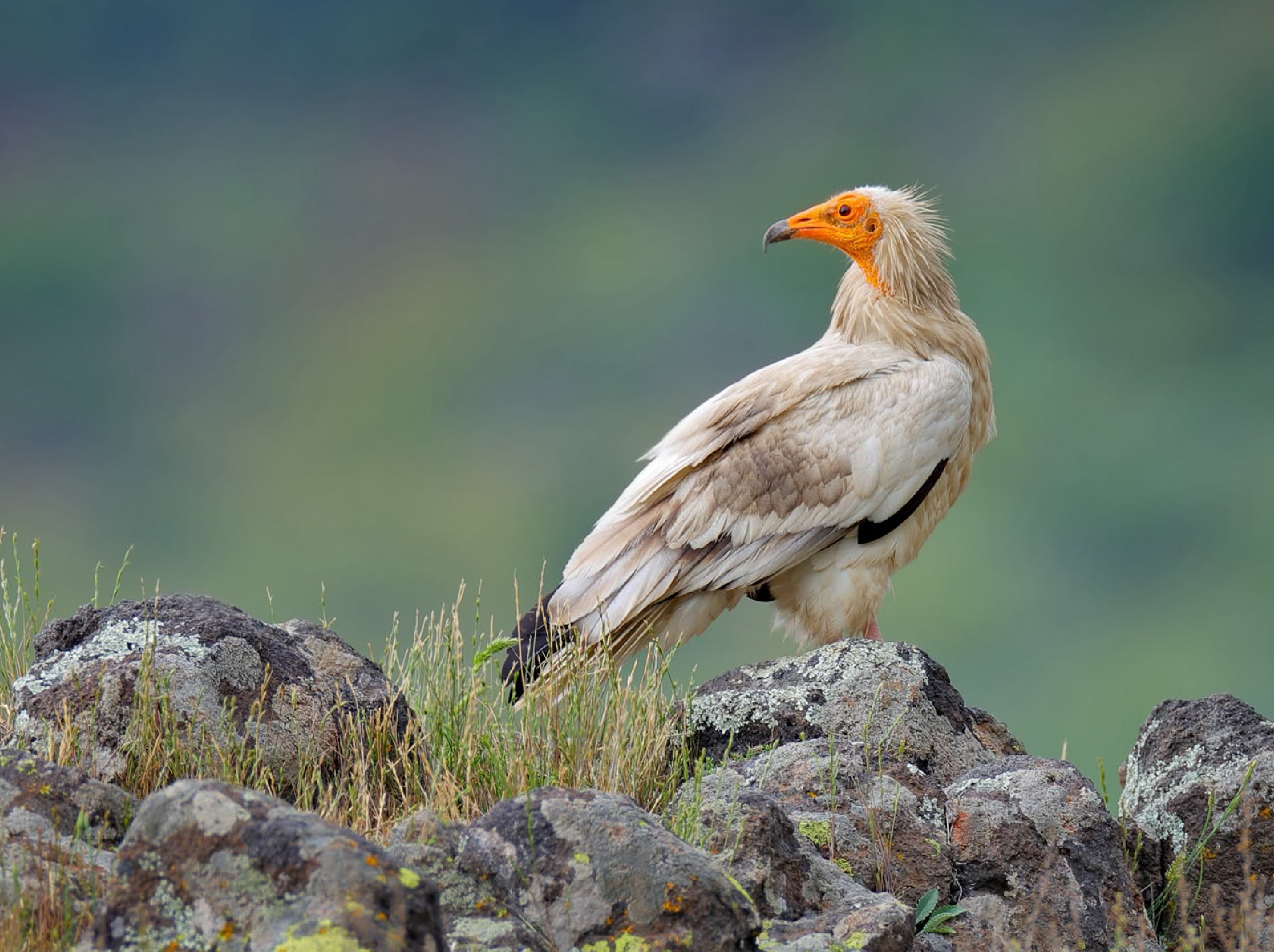
Despite these declines, the report also highlights reasons for hope. The factors driving bird population declines are well understood and are primarily caused by human activities, including invasive alien species, intensive agricultural expansion, climate change and unsustainable hunting practices. When these pressures are addressed, and agricultural and hunting practices and land management are improved across the entire flyway rather than focusing on individual sites, bird populations respond to these efforts and begin to recover. For example, coordinated efforts across several countries to conserve the Egyptian Vulture have helped halt the decline of the breeding population in the Balkans.
Dr Stuart Butchart, Chief Scientist at BirdLife International and lead editor of the State of the World’s Birds report, said:
“Migratory birds are living indicators of the health of our environment, and their declining populations reveal the growing pressures facing the natural systems on which our lives depend. But science also clearly shows that conservation efforts deliver tangible results; coordinated action can prevent species extinctions and help populations recover. The solutions already exist, and what we need now is to implement them across entire flyways.”
The State of the World’s Birds report highlights a fundamental reality: a flyway is not simply a line on a map, but a vast and interconnected network of important sites and critical habitats that support migratory birds across continents and throughout the seasons. When one link in this network is disrupted or weakened, the entire chain becomes vulnerable.
Recognising these interconnections, BirdLife International—the only global partnership dedicated to conserving birds and all forms of life on Earth, with 125 partners in 120 countries—has developed the Global Flyways Programme. Rather than focusing on individual sites, species or national borders, this approach aims to protect and restore entire flyways by bringing partners together to work across the full migration cycle, from breeding grounds and stopover sites to wintering grounds.
During the Global Flyways Summit, a number of leaders, scientists and conservation organisations will sign the Nairobi Flyways Declaration, in an unprecedented step reflecting a commitment to strengthening coordinated conservation efforts for migratory birds at the scale of entire flyways.
The declaration recognises that the survival of migratory birds, which cross borders and continents, depends on collective action by different stakeholders across entire flyways, rather than on separate and limited national efforts.
Her Imperial Highness Princess Takamado, Honorary President of BirdLife International, said:
“Today, we stand at a turning point, recognising that migratory birds know no borders. They cross continents, connecting Asia and Africa, and the Arctic with the tropics. The Nairobi Flyways Declaration reflects this reality clearly. I am proud to see the scientific community, conservation organisations and financial institutions united in supporting efforts grounded in science and evidence. The moment we have been waiting for has arrived.”
The Summit brought together senior officials from the World Bank and regional development banks, signalling a growing institutional commitment to conserving migration flyways. Three multilateral development banks are also working to integrate flyway conservation into their lending and financing frameworks, bringing the value of commitments made since 2021 to more than $6 billion.
The Asian Development Bank is allocating $3 billion over the next decade to protect at least 50 priority wetland sites along the East Asian–Australasian Flyway, supporting approximately 200 million people who depend on these ecosystems.
The Development Bank of Latin America and the Caribbean (CAF) is providing between $3 billion and $5 billion through 2050 to protect more than 30 important terrestrial sites and marine areas.
Meanwhile, the World Bank and BirdLife International are working to mobilise several billion dollars to support nature conservation efforts across Africa, Europe and Asia, along flyways used by more than two billion migratory birds.
Community-led conservation efforts are also growing. In June 2026, the Global Environment Facility approved the Global Flyways Grant Programme mechanism, a dedicated financing mechanism to support flyway conservation efforts and the restoration of important habitats for migratory birds. The mechanism provides $8.97 million in direct grants, alongside $107 million in co-financing, to support the conservation and restoration of wetlands across 9 million hectares, benefiting an estimated 330,000 people.
Ibrahim Khader, Regional Director of BirdLife Middle East, said:
“The Middle East is a vital part of the African-Eurasian Flyway, and millions of migratory birds depend on its wetlands, coastlines and important habitats to continue their journeys. Protecting these birds requires transboundary cooperation and collective action across the entire flyway. The Nairobi Flyways Declaration represents an important step towards strengthening this shared responsibility and turning commitment into tangible action.”
Martin Harper, Chief Executive of BirdLife International, said:
“The State of the World’s Birds report is clear and unequivocal: we are losing migratory birds at an alarming rate. But the Nairobi Declaration and the funding commitments announced today demonstrate a clear reality: when the scientific evidence is compelling, and when we succeed in communicating the importance of the issue, the world responds. Governments are stepping up their efforts, and development banks are responding to the challenge. Now is the time to deliver on these commitments at scale.”